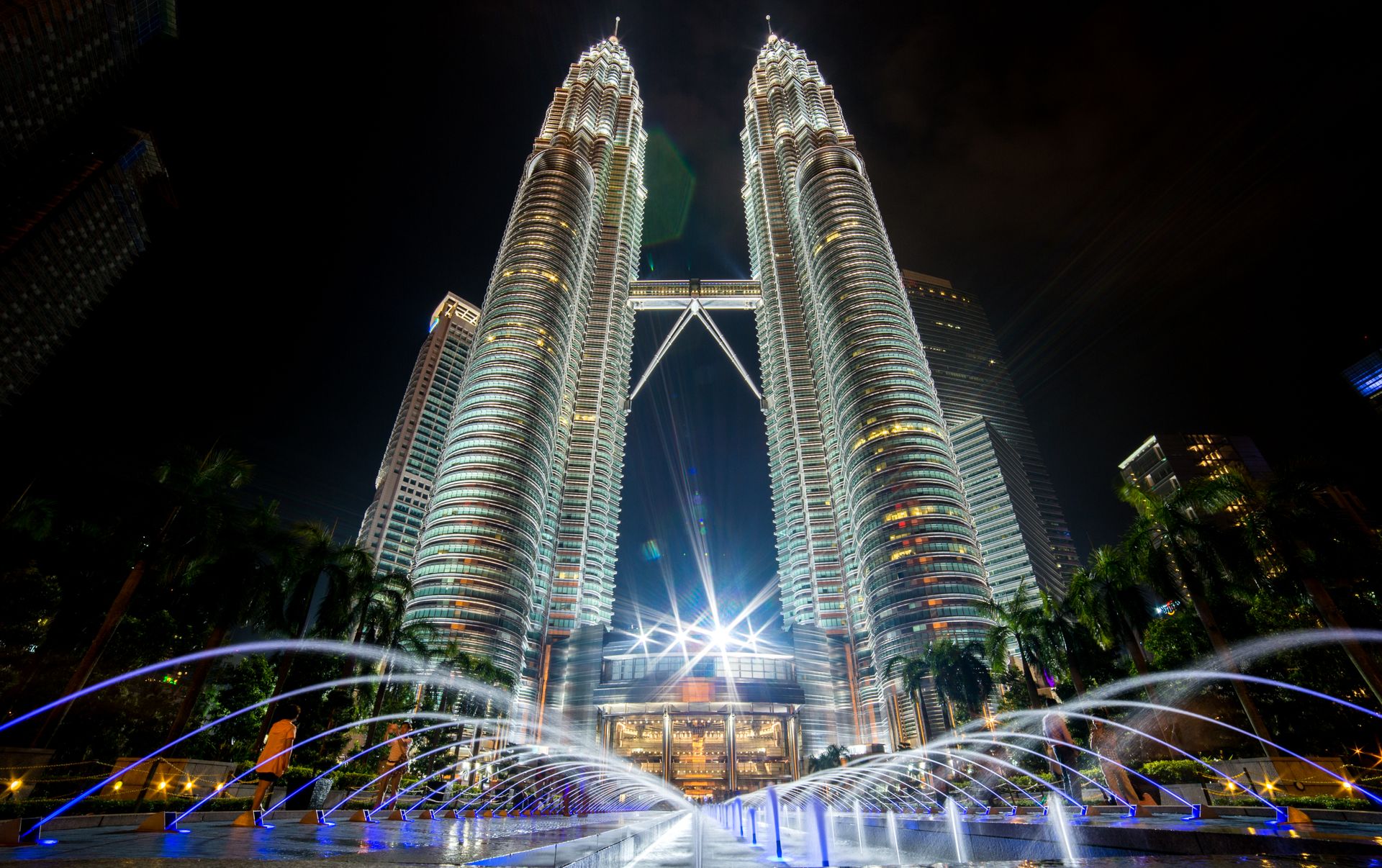
Kuala Lumpur Petronas Towers skyline at twilight
Malaysia's Beating Heart

Kuala Lumpur

Where skyscrapers touch clouds and street food feeds the soul

Why Kuala Lumpur Captivates

Kuala Lumpur is not a city that reveals itself immediately. It is a city of layers — of Malay kampungs hidden behind glass towers, of Michelin-starred street food served on plastic plates, of mosques and temples standing shoulder to shoulder. The Petronas Towers, once the world's tallest buildings, still dominate the skyline, but KL's true character is found in its alleyways: the smell of satay smoke on Jalan Alor, the call to prayer echoing off Bukit Bintang's malls, the night markets that appear after sunset and vanish before dawn.

KL is Malaysia's most accessible city for first-time visitors. English is spoken everywhere. The MRT and LRT make getting around effortless. The food scene is world-class and affordable. And the city's multicultural soul — Malay, Chinese, Indian, and expatriate communities living side by side — makes it a microcosm of everything Malaysia represents.

What to See in Kuala Lumpur

Petronas Towers

KLCC

Once the world's tallest buildings, the Petronas Towers remain KL's most iconic landmark. The Skybridge on the 41st floor offers stunning views, and the Suria KLCC mall at the base is a shopping paradise. The towers are most beautiful at night when illuminated against the sky.

Book Skybridge tickets online in advance — they sell out days ahead

Batu Caves

Gombak

A limestone hill with a series of caves and cave temples, dominated by a 42.7-meter tall golden statue of Lord Murugan. The 272 rainbow-colored steps lead to the main temple cave. During Thaipusam, the caves become the site of one of Southeast Asia's most spectacular Hindu festivals.

Go early morning (before 9am) to avoid crowds and heat

Merdeka Square (Dataran Merdeka)

Colonial Core

The site where Malaysia declared independence in 1957. The 95-meter flagpole is one of the world's tallest. Surrounded by colonial architecture including the Sultan Abdul Samad Building, the Royal Selangor Club, and St. Mary's Cathedral. The atmosphere is especially magical at dusk.

Visit at night when the buildings are illuminated in colored lights

Chinatown (Petaling Street)

Central Market

KL's Chinatown is a sensory overload of counterfeit goods, street food, and herbal medicine shops. The Central Market nearby offers more curated handicrafts. The area is best experienced in the evening when the street food stalls fire up and the night market buzzes with energy.

Bargain hard — start at 50% of the quoted price

Islamic Arts Museum

KL Lake Gardens

Southeast Asia's largest museum of Islamic art. Over 7,000 artifacts from across the Muslim world, including rare Qurans, textiles, jewelry, and a stunning collection of Islamic architecture models. The building itself is beautiful, with domes and blue-tiled roofs.

Allocate at least 2 hours — the collection is vast and well-curated

Jalan Alor

Bukit Bintang

KL's most famous street food destination. Over 100 stalls and restaurants line this street, serving everything from satay and durian to seafood and frog porridge. The atmosphere is electric — plastic tables, fluorescent lights, and the smell of charcoal smoke. Open until 3am.

Wong Ah Wah is the legendary satay stall at the end of the street

KL's Best Neighborhoods

KLCC & Ampang

The modern face of KL. Petronas Towers, KLCC Park, and high-end hotels. The area is clean, safe, and well-connected by MRT. Best for families and business travelers. The park's lake and jogging track are popular with locals.

Bangsar

KL's expat and hipster neighborhood. Independent cafes, boutique shopping, and a relaxed atmosphere. The weekend markets are excellent. Best for travelers who want a more local, less touristy experience. Great food at Devi's Corner and Nirvana Banana Leaf.

Practical Information

  • How to get there: KL International Airport (KUL) is a major ASEAN hub with direct flights from most global cities. The KLIA Ekspres train reaches the city center in 28 minutes.
  • Getting around: The MRT, LRT, and Monorail cover most tourist areas. Grab is cheap and reliable. The GO KL free bus service connects major attractions. Walking is possible in the heritage areas but challenging in the heat.
  • Best time to visit: Year-round, but June-August is driest. December-February can be rainy but is festival season. Avoid haze season (September-October) when air quality drops.
  • Where to stay: Bukit Bintang for nightlife and shopping. Chinatown for culture and budget options. KLCC for luxury and modern amenities. Bangsar for a local, hipster vibe.
  • Language: Malay and English are widely spoken. Mandarin and Tamil are common in Chinatown and Little India respectively.

Ready to Explore Malaysia's Capital?

KL is the perfect starting point for any Malaysian adventure. Use our budget calculator to plan your trip.

Calculate Your Budget