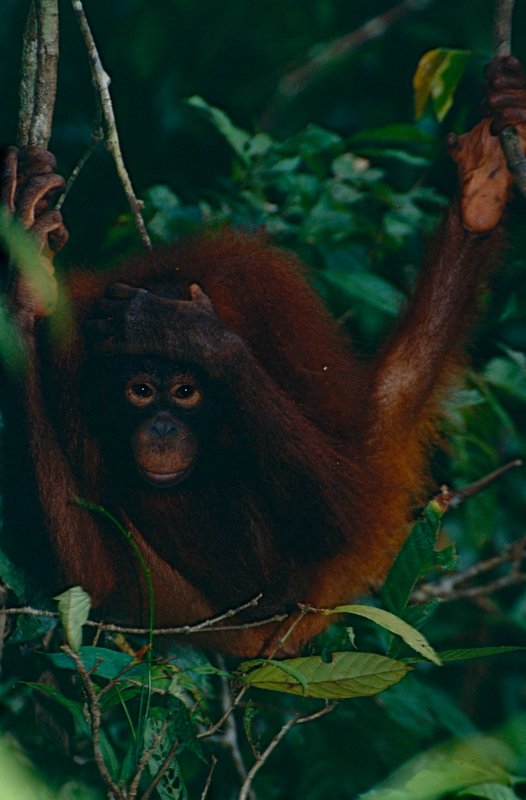
Orangutan in Borneo rainforest
130 Million Years of Wild

Malaysia Wildlife

Orangutans, pygmy elephants, ancient rainforest, and the greatest biodiversity in Southeast Asia

Malaysia's Living Treasure

Malaysia is one of the world's 17 megadiverse countries, and its wildlife is staggering. The nation is split between two ancient landmasses: Peninsular Malaysia, home to the world's oldest rainforest at 130 million years, and Borneo, the third-largest island on Earth and one of the most biodiverse regions on the planet. Together, they harbor orangutans, pygmy elephants, Malayan tigers, clouded leopards, sun bears, and the world's largest flower — the Rafflesia — which grows to a meter across and smells like rotting meat.

The contrast between the two regions is dramatic. Peninsular Malaysia offers accessible wildlife experiences in Taman Negara and the Endau-Rompin rainforests. Borneo offers the raw, untamed wilderness that has made it a global conservation priority. The Kinabatangan River in Sabah is one of the best wildlife-watching destinations in Asia — a single dawn river cruise can reveal elephants, orangutans, crocodiles, and half a dozen species of hornbill. This is Malaysia's wild side, and it is unforgettable.

Iconic Wildlife Experiences

Orangutans

Semenggoh & Sepilok

Malaysia is one of only two countries where orangutans still exist in the wild (the other is Indonesia). At Semenggoh Wildlife Centre in Sarawak and Sepilok in Sabah, orphaned and injured orangutans are rehabilitated and released into protected forest reserves. Morning and afternoon feeding sessions offer close encounters with these great apes. Seeing a wild orangutan in the canopy is a moment of pure wonder.

Visit during fruiting season (December-February) when wild orangutans are less dependent on feeding sessions

Pygmy Elephants

Kinabatangan River, Sabah

The Borneo pygmy elephant is a distinct subspecies, smaller and more gentle than mainland Asian elephants. They inhabit the floodplains of the Kinabatangan River, where they can be seen swimming, bathing, and feeding along the riverbanks. A dawn river cruise is the most reliable way to encounter them. Herds of 20-30 elephants are not uncommon.

Stay at a riverside lodge for 2-3 nights — elephant sightings are almost guaranteed

Proboscis Monkeys

Bako National Park, Sarawak

These extraordinary primates, with their pendulous noses and pot-bellies, are endemic to Borneo and cannot be found anywhere else on Earth. Bako National Park is the most accessible place to see them. The males' noses grow to the size of a banana, and they use them as a resonating chamber to amplify their calls. They are social, curious, and surprisingly photogenic.

Stay overnight in Bako for the best sightings at dawn and dusk

Sea Turtles

Perhentian Islands, Terengganu

Green and hawksbill sea turtles nest on Malaysian beaches from April to September. The Perhentian Islands, Redang, and Tioman are the most accessible nesting sites. At Turtle Bay on Perhentian Kecil, snorkelers can swim alongside turtles feeding on seagrass. The Cherating Turtle Sanctuary on the east coast runs conservation programs and night watching tours.

The best turtle encounters are at dawn when they come to the shallows to feed

Rhinoceros Hornbill

Throughout Borneo

Malaysia's national bird, with its dramatic orange and yellow casque, is one of the largest hornbills in the world. They are found across Borneo and Peninsular Malaysia, often in pairs or small flocks. Their loud, cackling call echoes through the rainforest. The Kinabatangan River and Danum Valley are excellent places to spot them in flight.

Look for them at fruiting fig trees — they are frugivores and gather in large numbers

Sun Bears

Bornean Sun Bear Conservation Centre, Sepilok

The world's smallest bear species, sun bears are critically endangered and found only in Southeast Asia. The Bornean Sun Bear Conservation Centre in Sepilok, next to the orangutan sanctuary, rehabilitates rescued bears and educates visitors about their plight. Their long tongues are adapted for extracting honey and termites from tree hollows.

Combine with a Sepilok orangutan visit — the two centers are walking distance apart

Malayan Tapir

Taman Negara & Zoo Negara

Malaysia's largest land mammal, the Malayan tapir is a black-and-white oddity that looks like a cross between a pig and an anteater. They are shy and nocturnal, making them difficult to spot in the wild. Taman Negara offers the best chance, but Zoo Negara in KL has an excellent breeding program and is the most reliable place to see them.

Night walks in Taman Negara offer the best chance of a wild tapir encounter

Rafflesia

Cameron Highlands & Gunung Gading

The world's largest flower, the Rafflesia can grow to a meter across and weigh 11 kilograms. It is parasitic, has no leaves or stems, and emits a smell of rotting meat to attract carrion flies for pollination. The flower is rare, unpredictable, and unforgettable. It blooms in the Cameron Highlands and Gunung Gading National Park in Sarawak.

Call ahead to check if any Rafflesia are in bloom — the flower only lasts 5-7 days

Where to See Wildlife

Marine Life

Perhentian Islands

Green and hawksbill sea turtles, reef sharks, barracuda, and clownfish. The coral reefs are shallow enough for snorkelers to see everything. Turtle nesting season is April to September. The marine park protects one of the most biodiverse reef systems in Malaysia.

Bird Watching

Fraser's Hill & Kinabalu Park

Fraser's Hill in Peninsular Malaysia is a premier bird-watching destination with over 250 species. Kinabalu Park in Sabah is a UNESCO World Heritage Site with montane forest birds found nowhere else on Earth. Both offer excellent birding trails and guides.

Wildlife Conservation in Malaysia

  • Malaysia is one of 17 megadiverse countries, hosting approximately 20% of the world's animal species
  • The Malayan tiger is critically endangered with fewer than 150 individuals remaining in the wild
  • Orangutan populations have declined by 50% in the last 60 years due to palm oil deforestation
  • The Kinabatangan Wildlife Sanctuary is the last stronghold for Borneo pygmy elephants
  • Turtle conservation programs in Malaysia have successfully increased green turtle nesting numbers by 300% since the 1980s
  • Choose eco-certified lodges and tour operators to support conservation efforts

Ready to Meet the Wild?

Malaysia's wildlife is among the most accessible and diverse in Southeast Asia. Use our budget calculator to plan your adventure.

Calculate Your Budget Explore Borneo